Smart Materials · Georgia Tech–CNRS · Metz
See beneath the surface.
Understand the material.
Terahertz and ultrasonic methods reveal internal structure and material properties without damaging the sample. At IRL 2958, we combine experiments with signal processing and physical modelling to turn measurements into useful information.
Complementary approaches
Two ways to investigate what lies within
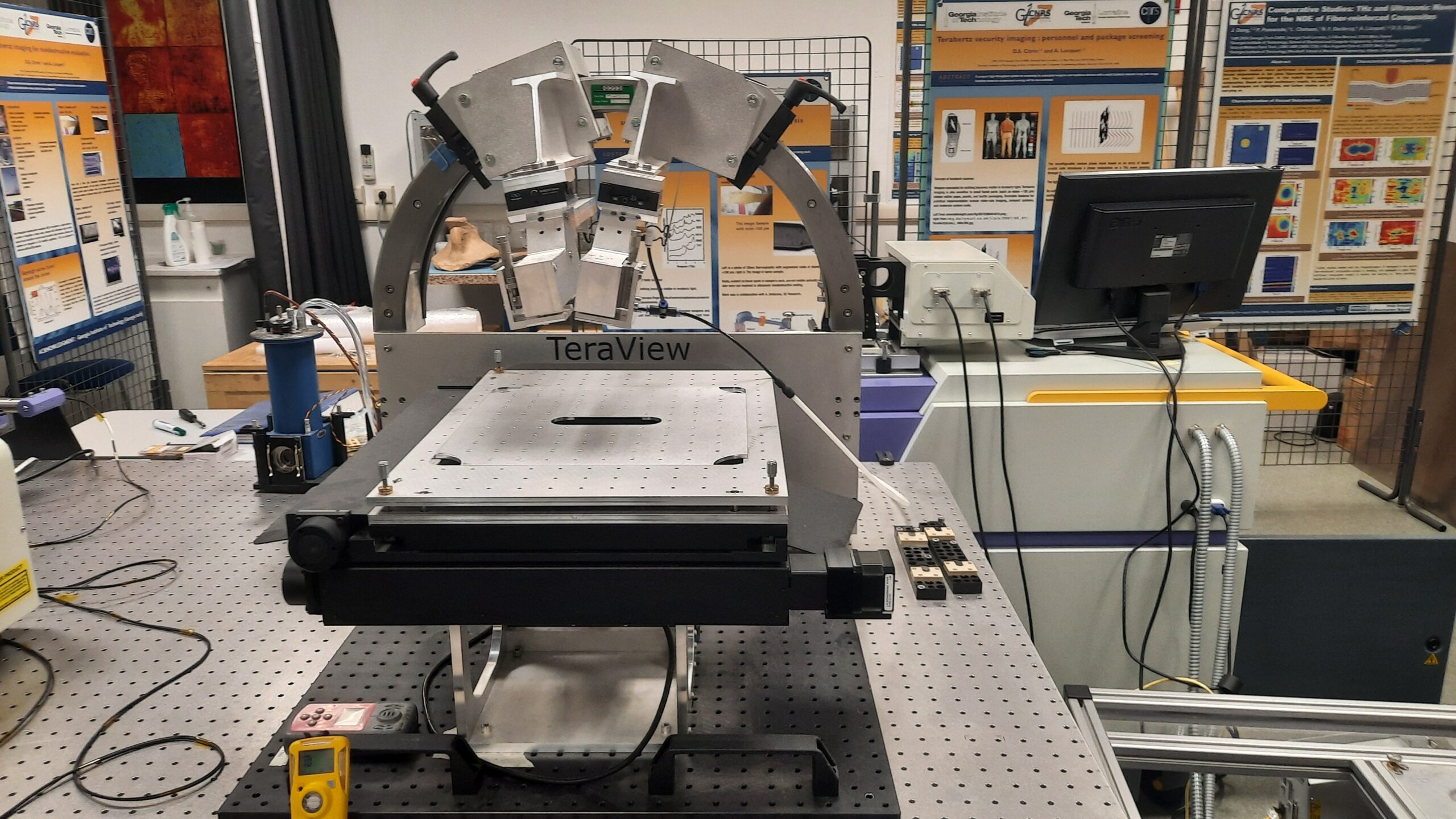
Electromagnetic waves
Terahertz imaging
and spectroscopy
Time-domain imaging and spectroscopy probe layers, interfaces and dielectric response in suitable materials. Reconstruction and deconvolution help interpret overlapping echoes and recover subsurface information.
THz Imaging & Nonlinear Dynamics Group
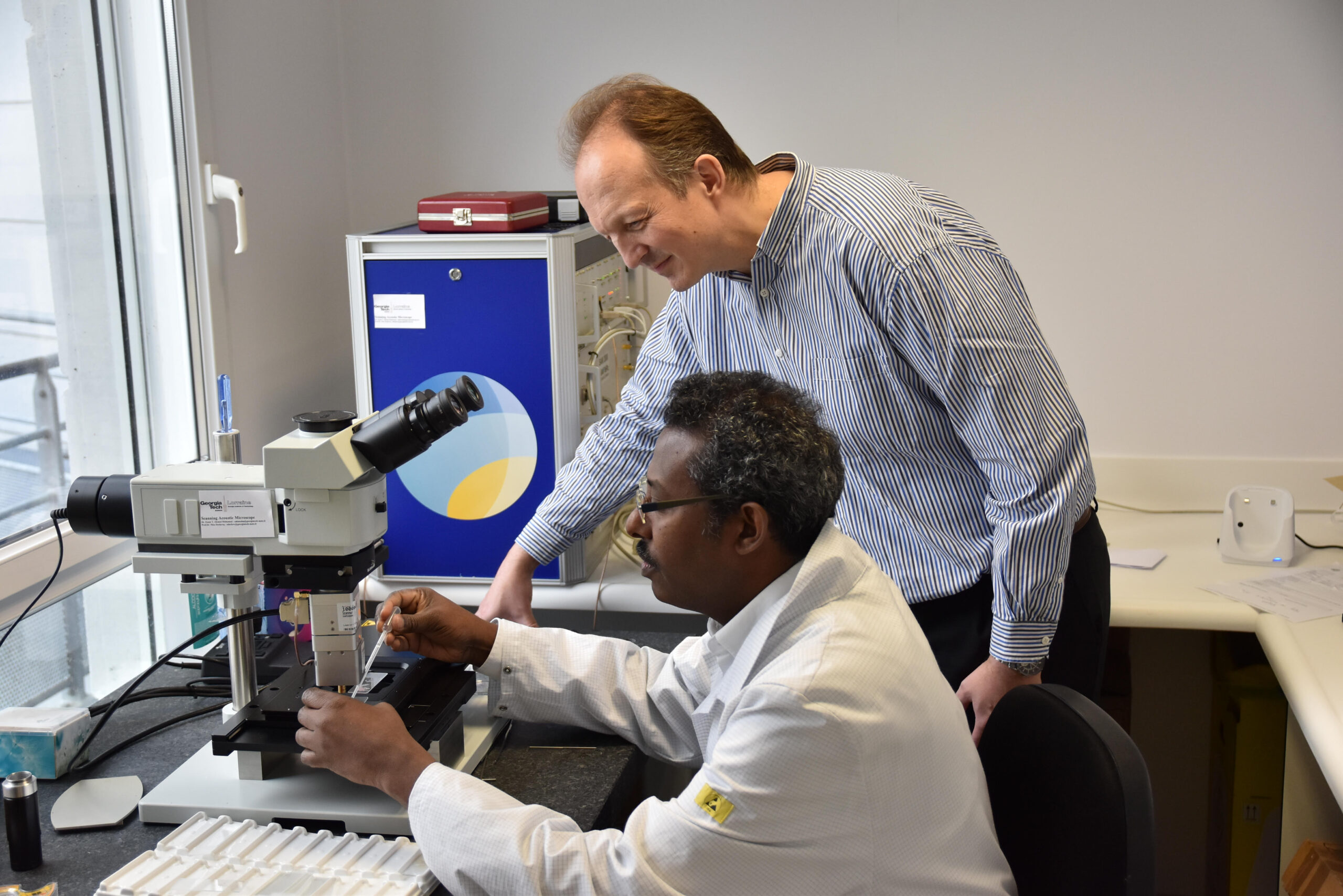
Mechanical waves
Ultrasonics
and acoustic microscopy
Ultrasonic measurements investigate wave propagation, internal structure and material response. Experiments, acoustic microscopy and modelling connect the measured signals to the properties of the material.
Nico F. Declercq · Engineering Wave Propagation Laboratory
Materials and applications
Questions across scales and materials
Composites
Impact damage, delaminations and internal organization.
Coatings and layers
Thin films, multilayer structures, steel and oxide layers.
Microelectronics
Packaging materials, buried interfaces and layer structure.
Cultural heritage
Stratigraphy and subsurface features in historical objects.
Our research approach
From a measurement to material information
Define the question
Identify the material, geometry and feature to investigate.
Choose the measurements
Select suitable terahertz, ultrasonic or complementary approaches.
Reconstruct and interpret
Combine signal processing, inverse problems, data fusion and machine learning with physical understanding.
The approach depends on the sample and the information sought. Absorption, contrast between interfaces and measurement geometry affect what can be resolved.
Part of a wider research network
The platform is part of the Carnot ARTS NDE platform and the “Optoelectronics” platform of MAT-PULSE, within the Initiative d’Excellence Lorraine, a France 2030 I-SITE programme.
Research collaborations
What would you like to investigate?
Tell us about the sample’s composition and dimensions, and the feature or question you would like to explore.
Alexandre Locquet
NDE platform lead · Smart Materials
IRL 2958 Georgia Tech–CNRS, Metz